

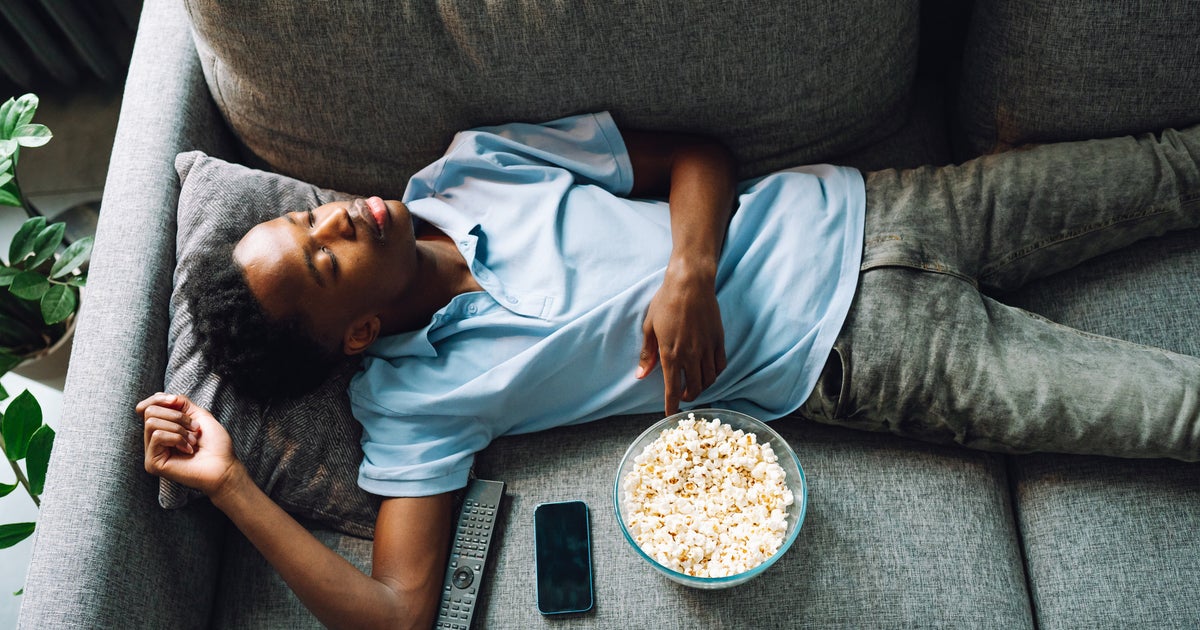
If you’re like most people, you’ve probably drifted off to sleep as soon as you put on a movie or show at night.
It’s a common occurrence — you sit down with your partner to finally watch the season finale of the show everyone is talking about, only to fall asleep, jolt awake, pretend you didn’t fall asleep and keep on watching until you fall asleep again.
Sleep experts told HuffPost there are many reasons this happens, and some are more concerning than others. Here’s what to know:
When you’re watching TV or movies at night, you’re often in a good sleep environment.
“There’s a couple of environmental factors to the fact of watching TV, watching a movie that promotes sleepiness,” said Dr. Neal Walia, a sleep specialist at UCLA Health in California. “When you wake up in the morning, you develop something called a sleep drive, which is how much your body wants to sleep.”
As you go about your day, your sleep drive goes up before peaking at bedtime, he explained. “And that drive is what gets you into sleep and carries you to sleep,” Walia noted.
“Usually, people are watching movies and TV in the evening after a long workday. This is when their sleep drive is at the highest,” he said. So your body naturally wants to sleep at this time.
“And then sometimes it’s just a lack of stimulation,” said Dr. Molly Atwood, the director of clinical training in the behavioral sleep medicine program at Johns Hopkins Medicine in Baltimore.
If you find yourself feeling tired throughout the day, you may notice that your fatigue disappears when you interact with something, whether that’s scrolling on your phone or getting up to make dinner.
Why? “Your body has a system of overcoming whatever sleepiness you have with stimuli,” according to Walia. And watching TV and or a movie is, generally, a low-stimuli activity, he noted. TikTok or even a task like folding laundry are more high-stimuli.
“If you’re lying down, it is dark — so your body’s kind of getting that signal that it’s nighttime and if the movie is not very stimulating or boring, it might be a lot easier, too, for any sleepiness that is there to take over,” Atwood added.
“Another big thing is that, especially patients with insomnia, a lot of times what they’ll say to me is ‘I just can’t turn my brain off.’ And most of our day, our attention is preoccupied by something ― probably a screen, most likely ― but something is taking our attention away,” Walia said.
We don’t often just sit with our thoughts. That is, until we drift off to sleep at the end of the day. And if you’re stressed about work or anxious about money, sitting with your thoughts can make it difficult to fall asleep.
“But if you’re watching something like a show, you’re not really in your own head for the most part,” Walia said. Your attention is drawn to the show or movie you’re watching, not the taxes you still need to do. This encourages your body to drift off to sleep.
Morning people are more likely to fall asleep while watching TV at night.
Your body’s natural circadian rhythm can play a role in whether you’re prone to falling asleep on the couch or not.
“In some circumstances, if you’re more of a morning person, your body naturally makes you alert early in the morning and it shuts down alertness early at night,” Atwood said.
Folks in this group are just naturally more tired at night. For morning people, their body is giving them signals that it’s time for bed, which makes it more likely that they’ll drift off while watching TV.
It’s also more common if you re-watch shows.
Many people turn on their comfort shows after a long day. And according to Atwood, it’s more likely that you’ll fall asleep during a show you’ve seen several times.
“Our nervous systems are super calm and comforted, versus like an action movie or a horror movie,” Atwood said.
You also don’t have to pay much attention to the show to know what’s going on, which allows your body to drift off easily, too.
Olga Rolenko via Getty Images
Most people are also sleep-deprived, which makes it easy to fall asleep while watching TV.
“A lot of our population is sleep deprived,” said Walia, who explained that most people aren’t getting the seven to nine hours of sleep they need each night.
Everyone has different individual sleep needs. But no matter how much sleep your body requires, most folks aren’t getting it.
Because of busy days, family demands and high-stress jobs, you may not even notice you’re sleepy until you’re interacting with something that’s low-stimuli, like a movie. This is when your sleep deprivation can catch up with you and cause you to fall asleep.
Even people who sleep the recommended seven to nine hours a night may not be getting good quality sleep, which can also result in sleepiness on the couch.
“There’s many people out there with untreated or under-treated sleep disorders that disrupt the quality of sleep,” Walia said, adding that sleep apnea is one example of this.
If you fall asleep during a movie once in a while, there isn’t much cause for concern ― but if this is a regular habit, it’s worth evaluating your sleep.
It’s understandable if you fall asleep on the couch after a busy day of travel or after a late night out, but if you’re falling asleep in front of the TV frequently, you should take notice.
“If you’re sitting upright, the lights are on, it’s an engaging movie … and you still can’t keep yourself awake, that might be more of like, ‘OK, I should reevaluate how much sleep I’m getting overall,’” Atwood said.
If you think you’re getting enough sleep but still falling asleep during engaging shows and movies, it’s worth talking to a sleep specialist, she added. A professional can help test you for underlying conditions that could disrupt your sleep.
Being able to stay awake during movies and TV shows at night could be a sign of good sleep health.
If you can usually stay awake while watching TV or movies at night, it’s “probably a good indication that [you’re] not sleep deprived or they’re not having disruptions in their sleep,” Walia said.
This nighttime energy reflects relatively good sleep health, he added.
Some sleep disorders can keep people from napping or falling asleep during shows and movies, but, overall, if you are getting enough high-quality sleep, you likely have good sleep health, he said.