
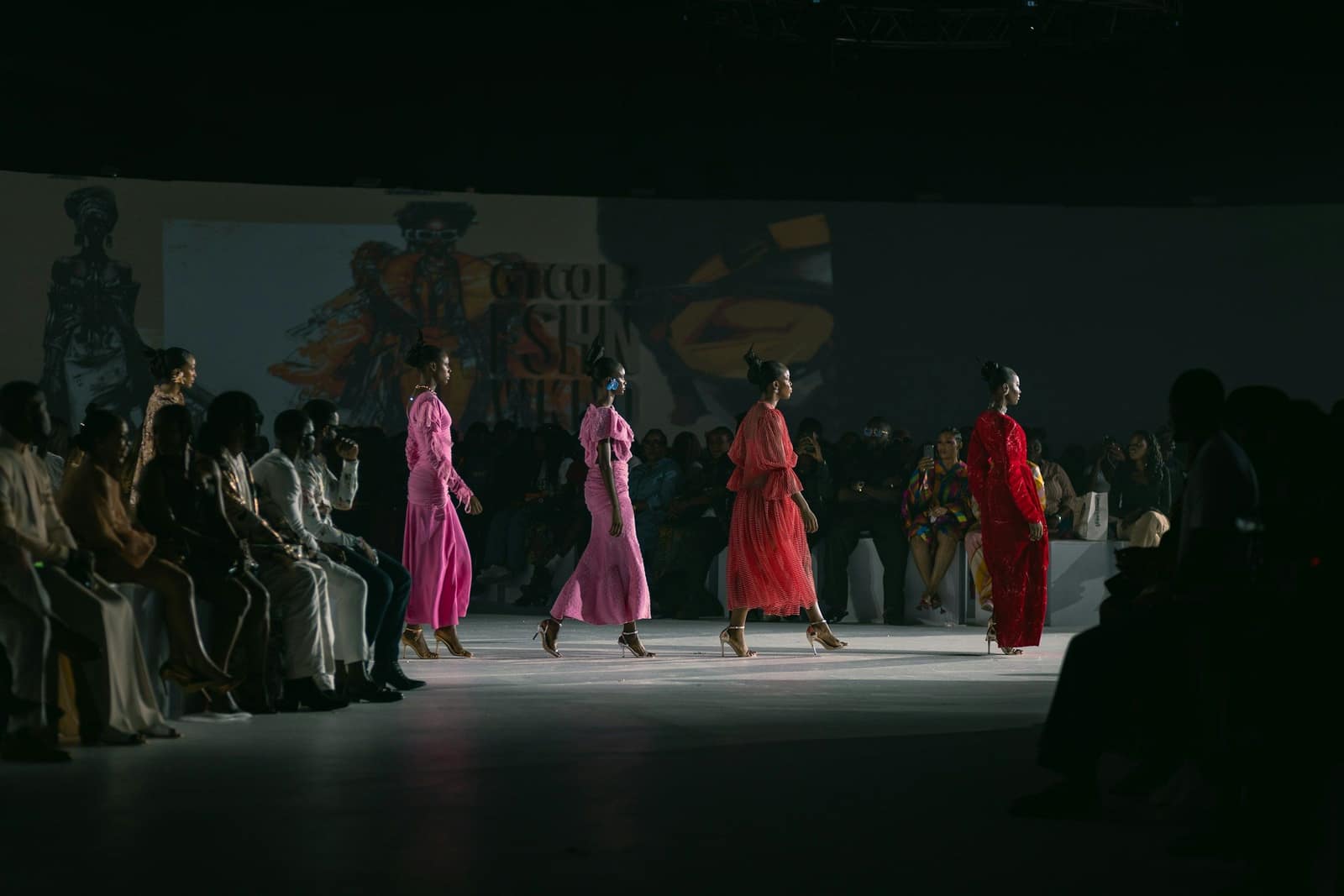
Every autumn, a small circuit of cities puts on a month-long show about what people will wear a year from now. The circuit is so familiar that its shorthand has become part of ordinary fashion talk. “The shows” means one of four fashion weeks, and “the season” means the half-year that the clothes belong to, not the weather outside. Once you know how the calendar is laid out, a surprising amount of fashion news stops looking random.
Two seasons, shown early
Womenswear runs on two main seasons. Autumn/winter collections are traditionally shown in February and March, and spring/summer collections in September and October, a pattern that holds more or less to this day. The point of showing so far ahead is practical. Buyers from department stores and independent boutiques need to order stock, factories need time to cut and sew, and magazines work to long lead times of their own. A coat you see on a runway in February is, in the ordinary course of things, designed to be in shops the following autumn.
This is the first thing to remember when reading the shows: a collection is a statement about the next season, not the current one. When a designer sends out sandals and light linen in September, they are not out of step with the weather. They are on schedule.
The four weeks
The order of the main fashion weeks is as regular as a timetable:
- New York traditionally opens the cycle, in early September for spring/summer.
- London follows. This season’s London schedule, as published, ran from 17 to 21 September.
- Milan comes next, with this season’s dates reported as 22 to 28 September.
- Paris closes the circuit and is the largest, with this season’s womenswear week reported as running from 28 September to 6 October.
Each week has its own character, and its own organising body. The British Fashion Council organises London Fashion Week, and in Paris the schedule is set under the Fédération de la Haute Couture et de la Mode. New York and Milan have their own trade bodies. London has built a reputation for new talent and experiment; Milan is closely associated with Italian tailoring, leather and luxury craft; Paris is where the largest houses tend to present. These are generalisations, and every season produces exceptions, but they are a useful starting map.
The other calendars
The four weeks are the centre of the year, not the whole of it.
Menswear has its own shows, held on a separate rhythm in January and June in many cities, although some brands present men’s and women’s collections together. The idea of combining the two into a single event has been discussed for years, partly as a way of reducing the amount of travel the industry does.
Haute couture, the made-to-order end of fashion, is shown in Paris on its own calendar, typically in January and July. Couture is a different business from ready-to-wear: very small numbers of clients, very long hours of handwork, and clothes whose main audience is often the people watching the show.
Pre-collections, often called resort or cruise and pre-fall, sit between the main seasons. They tend to be shown in smaller, more private formats, and because they spend longer in shops, they are often closer to what people actually end up wearing. They are easy to overlook, and they are worth noticing.
Why the old rhythm is under strain
The traditional calendar has never been entirely fixed, and in recent years it has been pulled in several directions. Around 2016 a number of designers began experimenting with “in-season” shows, in which clothes go on sale shortly after they are shown rather than months later. The argument is that customers, who are used to seeing everything instantly online, find a six-month wait strange. The counter-argument is that the long lead time is what allows small makers to produce carefully, and that rushing it adds pressure all down the supply chain.
There is also the sheer volume. A season can mean hundreds of shows and presentations, and the largest weeks have grown crowded, which is one reason newer, smaller brands sometimes choose their own dates, their own venues or a film instead of a runway.
How to follow a season without losing a month
You do not need to watch every show. A more useful approach is to follow the cycle in stages.
- During the weeks themselves, pay attention to repeated ideas rather than individual looks. If a particular silhouette, fabric or colour appears at several unrelated houses, that is a direction. A single dramatic dress is a moment.
- In the weeks afterwards, read the reviews and the retailers’ buying notes. This is where runway ideas are translated into things that might be wearable.
- When the clothes arrive in shops, which is a few months later, look at what has survived the journey. Runway styling is often exaggerated for effect, and the version in the shop is usually quieter, which is often the better guide to what people will really wear.
What the calendar tells you about a brand
A brand’s place in the calendar says something about how it works. Showing on the official schedule at a major fashion week signals a particular kind of business. Choosing an off-schedule date, or a different format, is a decision rather than an absence, and it is worth asking what the brand is doing differently and why.
It also helps to remember that fashion weeks are trade events first. They are where buyers and editors see the clothes, and the spectacle around them, the street style outside the venues and the front-row photographs, is a by-product. Plenty of important decisions are made in showrooms, away from any camera.
The short version
If you take one thing from the calendar, take the timing. The shows describe the future, the shops catch up months later, and the in-between is where the real fashion news tends to be. The cycle will keep shifting, and the people who run it will keep arguing about whether it should. In the meantime, it gives a reliable shape to the fashion year, and a good reason to look at what is on the rails with slightly more curiosity.
This article is general information about the fashion industry. Dates for individual fashion weeks change from season to season; check the organisers’ own schedules.
Sources: Wikipedia (Fashion week); The Industry Fashion (London Fashion Week September 2026 schedule); Sortiraparis (Paris women’s fashion week, spring/summer 2027)


