
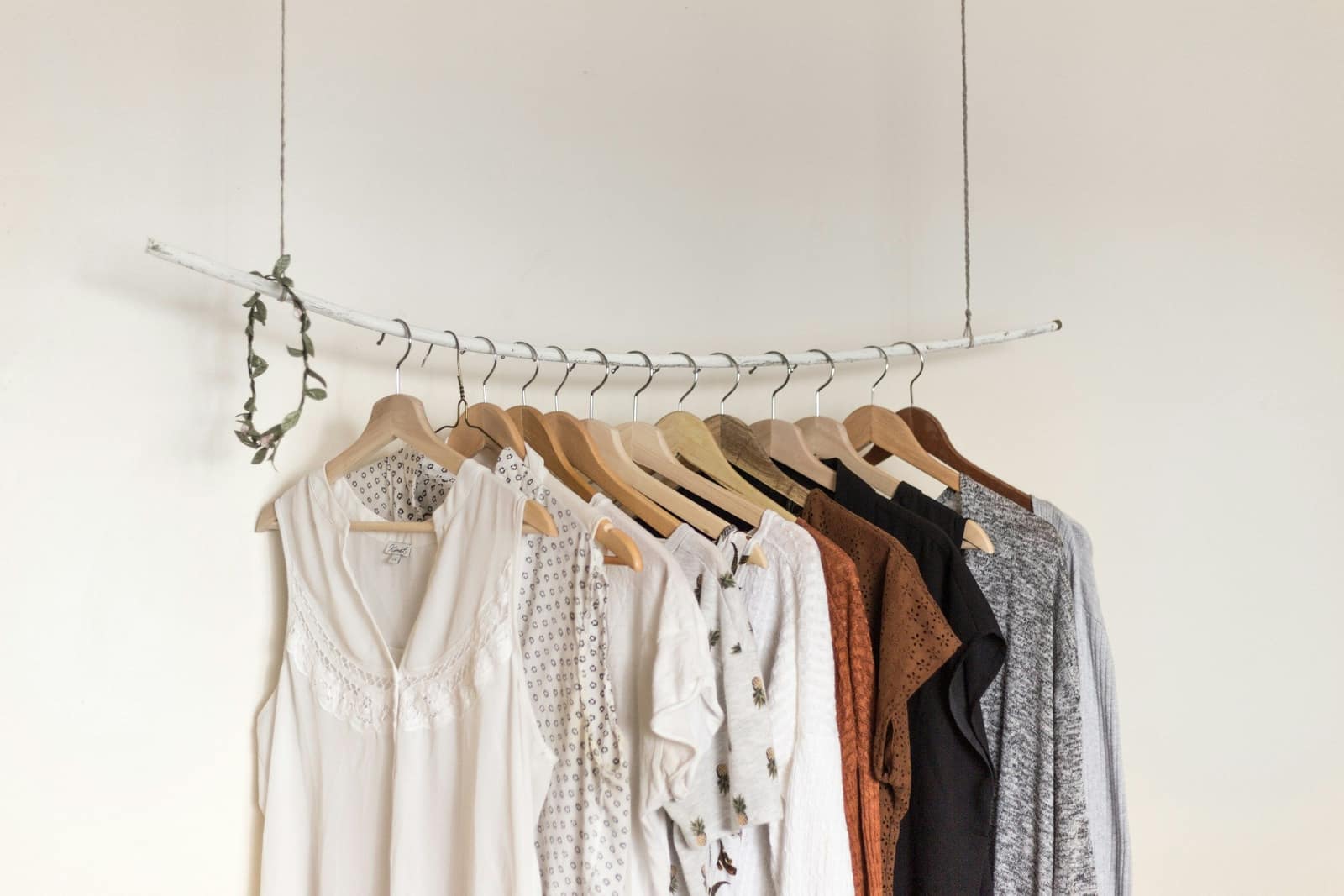
There is a familiar scene in front of an open wardrobe: a rail full of clothes and the feeling that there is nothing to wear. The problem is rarely quantity. It is that the clothes we own and the clothes we reach for are two different collections. The first includes things bought for an imagined life, things kept in case, and things that no longer fit or suit us. The second is smaller, more honest, and far more informative.
A wardrobe audit is a way of looking at the second collection and letting it guide you. It is not a purge, and it is not a minimalist project. It is a practical way of finding out what you wear and why, so that you can look after those things, fill genuine gaps and stop buying more of what you do not use.
Before you start
Choose a time when you are not in a hurry, and when you have a little space to lay things out, such as a bed or a clear floor. Give yourself a couple of hours. Put on some music if it helps.
You will need three or four places to put things: a “keep” area, a “maybe” area, a “mend or alter” area and a “let go” area. A bag or box for each is enough. Have a notebook or the notes app on your phone to hand, for reasons that will become clear.
Step one: get everything in view
The most useful change you can make is to see all of your clothes at once. Take things out of drawers, boxes and the back of the wardrobe, and group them by type: tops, trousers, dresses, knitwear, coats, shoes. A rail or a bed is fine. The aim is to counter the effect of familiarity: we tend to notice what is at the front, and forget what is hidden.
Do not try to decide yet. Simply look. You may find that you own six near-identical black jumpers, or a surprising number of things in a colour you have not worn for years. That is the beginning of the audit.
Step two: ask three honest questions of each item
Pick each piece up in turn and ask:
- Do I wear it? If you cannot remember the last time, it is probably not earning its place. If you wear it often, put it straight in the “keep” pile.
- Does it fit and feel right now? Not “might it fit again”, and not “it fitted once”. The clothes that serve you are the ones that fit the person you are at the moment.
- Do I like how I feel in it? This is the most useful question and the most neglected. A garment that is technically fine but makes you feel dull or uncomfortable will not be worn, however good its value.
Be kind. It is worth being honest, but there is no merit in guilt. A piece that did not work out is not a failure of judgement; it is information.
Step three: sort the “maybes” and the repairs
The difficult pile is the middle one. For things you are unsure about, a few practical tests help.
- The try-on test. Put it on and look in a mirror. If it looks and feels good, keep it. If you find yourself explaining why it might work in future, let it go.
- The outfit test. Can you think of three outfits you would wear it in, using clothes you already own? If not, it may not belong in your wardrobe, however nice it is.
- The mend test. If something is held back by a loose hem, a missing button or a broken zip, decide honestly whether you will fix it. If yes, put it in the repair pile and give yourself a deadline. If you have been meaning to fix it for a year, you probably will not.
- The sentimental exception. Some pieces are kept for reasons that have nothing to do with wearing them. That is fine, but give them a separate place, so they do not crowd the clothes you use.
Step four: look for patterns
When the sorting is done, look at what is in the “keep” pile. This is the part of the audit that is useful for the future, and it is why a note is worth making.
- What do the favourites have in common? You may find that they share a shape, a colour range, a fabric or a level of formality. That is your real style, as opposed to the style you think you ought to have.
- What is missing? If you love your jackets but have nothing to wear under them, or you have plenty of work clothes and few for the weekend, you have found a genuine gap.
- What is duplicated? If you have five of something and wear two, you have a clear signal not to buy a sixth.
- What does your life actually require? A wardrobe is a tool. If you spend most of your week in jeans and trainers, a collection weighted towards occasionwear is a mismatch.
Step five: decide where things go
For the pieces that are leaving, there is a hierarchy of options that is kinder to the clothes and often to your pocket.
- Pass it on to someone who will wear it, such as a friend or family member.
- Resell it through a resale platform or a local shop, if it is in good condition and has some value.
- Donate it to a charity shop, as long as it is clean and wearable.
- Recycle damaged items through textile recycling points, where those are available locally.
Be realistic about the time you will spend. A pile that sits by the door for months defeats the purpose, so set a date for the drop-off or the listing.
Step six: put it back with intent
Put the “keep” pile back in a way that makes wearing it easy. Hang things where you can see them. Group clothes that go together. Put the things you wear often at eye level, and the occasional pieces higher or lower. If you find yourself repeatedly wearing the same few pieces, make them more accessible still.
It can help to take a photograph of a few outfits that work, either on the bed or on yourself. On a rushed morning, a small library of combinations you know you like is more useful than a rail of possibilities.
What to do about the gaps
The audit will probably leave you with a short list of things you genuinely need. Resist the urge to rush out and fill it. A few principles make the shopping more deliberate:
- Wait. Give yourself a few weeks before buying anything. If you still need it, you will know.
- Buy for the wardrobe you have. Before purchasing, check that the new piece works with at least three things you already own.
- Choose fit and fabric first. A piece that fits well and feels good will be worn more, and tends to last longer.
- Consider what you can borrow, rent or buy second-hand, particularly for one-off occasions.
Keeping it going
A single audit helps, but the habit helps more. Many people find it useful to repeat a lighter version at the change of season, when you are already swapping clothes around. A simple rule, such as removing one thing for each new piece that comes in, keeps the wardrobe from creeping back to where it started.
The point is not to own less for its own sake. It is to own clothes that you wear, that fit the life you actually have, and that you are glad to find when you open the door. A wardrobe that works is a quiet thing, and the work of getting there is mostly a matter of paying attention.


